


Association of Alpha-Fetoprotein and Clinical Outcomes in Patients with Unresectable Hepatocellular Carcinoma Treated with First-Line Camrelizumab Plus Rivoceranib vs Sorafenib: Post Hoc Exploratory Analysis of the CARES-310 Trial


Abstract
Alpha-fetoprotein is a well-established prognostic biomarker for hepatocellular carcinoma, with elevated levels associated with worse clinical outcomes. We conducted a post hoc exploratory analysis of the CARES-310 trial to evaluate the impact of baseline alpha-fetoprotein levels on efficacy and safety outcomes. CARES-310 (NCT03764293) was a randomized, open-label, phase 3 trial comparing camrelizumab plus rivoceranib with sorafenib as first-line therapy in patients with unresectable hepatocellular carcinoma. Patients were stratified by baseline alpha-fetoprotein (<400 vs ≥400 ng/mL). This analysis assessed overall survival, progression-free survival, objective response rate, disease control rate, and safety by alpha-fetoprotein subgroup in the intent-to-treat and safety populations. Among 543 patients, 347 had alpha-fetoprotein <400 ng/mL and 196 had alpha-fetoprotein ≥400 ng/mL. Camrelizumab plus rivoceranib improved overall survival compared with sorafenib in both the alpha-fetoprotein <400 ng/mL subgroup (30.3 vs 20.2 months; hazard ratio [HR], 0.63; 95% confidence interval [CI], 0.47–0.84) and the alpha-fetoprotein ≥400 ng/mL subgroup (16.6 vs 10.8 months; HR, 0.66; 95% CI, 0.47–0.91). Progression-free survival was also improved in both groups (<400 ng/mL: 7.2 vs 3.8 months [HR, 0.63]; ≥400 ng/mL: 5.5 vs 2.3 months [HR, 0.39]). Objective response rate and disease control rate favored camrelizumab plus rivoceranib across alpha-fetoprotein subgroups. Safety profiles were consistent in patients treated with camrelizumab plus rivoceranib regardless of alpha-fetoprotein level, with no new safety signals identified. Although elevated AFP remains a marker of adverse prognosis, camrelizumab plus rivoceranib demonstrated clinically meaningful efficacy compared with sorafenib irrespective of baseline alpha-fetoprotein level. As a post hoc, exploratory subgroup analysis, this study was not powered to formally test for differences in treatment effect between alpha-fetoprotein subgroups, and results should be considered hypothesis-generating rather than confirmatory. These findings support the use of camrelizumab plus rivoceranib across alpha-fetoprotein–defined subgroups and highlight the need for validated predictive biomarkers in first-line systemic treatment for patients with advanced hepatocellular carcinoma.
Keywords: camrelizumab, rivoceranib, alpha-fetoprotein, hepatocellular carcinoma, sorafenib, CARES-310.
Introduction
Primary liver cancer, predominantly hepatocellular carcinoma (HCC), is a major and growing contributor to the global cancer burden, ranking as the third leading cause of cancer-related death worldwide and seventh in the United States1. Alpha-fetoprotein (AFP) modestly improves sensitivity for early-stage HCC detection2; biannual ultrasonography with or without AFP remains the standard surveillance method endorsed by major societies, including the American Association for the Study of Liver Diseases2,3. AFP is a glycoprotein that plays an immunoregulatory role during fetal development and is minimally expressed in healthy adults4. Elevated AFP levels in adults are associated with pathological conditions involving active liver regeneration, hepatitis, and malignancies, such as HCC and germ cell tumors4. AFP synthesis is more prevalent in tumors with large size, poor differentiation, and vascular invasion; therefore, AFP levels can provide important prognostic information for patients with HCC4.
The CARES-310 (NCT03764293) trial compared the combination of the anti-PD-1 antibody camrelizumab plus the VEGFR2-targeted tyrosine kinase inhibitor rivoceranib (also known as apatinib) with sorafenib as first-line treatment for unresectable HCC5. At the protocol-specified final analysis after an additional follow-up of 22.1 months for camrelizumab plus rivoceranib and 14.9 months for sorafenib, camrelizumab plus rivoceranib continued to show clinically meaningful improved overall survival (OS) and progression-free survival (PFS) compared with sorafenib (median OS, 23.8 months vs 15.2 months; hazard ratio [HR], 0.64 [95% CI, 0.52–0.79]; median PFS, 5.6 months vs 3.7 months; HR, 0.54 [95% CI, 0.44–0.67])6. The most common grade ≥3 treatment-related adverse events (TRAEs) for camrelizumab plus rivoceranib were hypertension (38%) and increased aspartate aminotransferase (AST; 17%) versus palmar-plantar erythrodysesthesia syndrome (16%) for sorafenib.
We hypothesized that the efficacy and safety benefit of camrelizumab plus rivoceranib over sorafenib would be maintained across AFP subgroups. The primary objective of this exploratory post hoc analysis was to evaluate the prognostic association baseline serum AFP levels (<400 ng/mL vs ≥400 ng/mL) with efficacy and safety outcomes; because no formal treatment-by-AFP interaction testing was performed, this analysis was not designed to assess the predictive value of AFP for treatment benefit. Given the established association between elevated AFP and poorer prognosis, we considered it clinically relevant to evaluate whether baseline AFP also influenced the safety profile of camrelizumab plus rivoceranib, providing a more complete assessment of the benefit-risk profile of this combination. An AFP level ≥400 ng/mL was selected based on its established clinical relevance in HCC. This threshold has consistently identified a poorer prognostic subgroup across multiple treatment settings7,8,9,10 and was recommended as a diagnostic criterion in the 2017 Chinese guidelines for the diagnosis and treatment of primary liver cancer11. Separate analyses were performed for the intent-to-treat population and for the safety population.
Methodology
Study Design and Patients
CARES-310 was a randomized, open-label, multicenter, phase 3 trial conducted at 95 sites across 13 countries. A detailed description of the study methods, outcomes, statistical analysis, and results has been previously published5,6. In brief, the trial enrolled patients with Barcelona Clinic Liver Cancer (BCLC) stage B or C, no prior systemic therapy for advanced disease, Eastern Cooperative Oncology Group performance status of 0 or 1, Child-Pugh class A, and at least one measurable lesion per Response Evaluation Criteria in Solid Tumors version 1.1 (RECIST v1.1). Patients were randomized 1:1 to receive camrelizumab 200 mg intravenously every 2 weeks combined with rivoceranib 250 mg orally daily, or sorafenib 400 mg orally twice daily. Patients were stratified by the presence of macrovascular invasion and/or extrahepatic spread (yes vs no), geographical region (Asia vs non-Asia), and baseline serum AFP (<400 vs ≥400 ng/mL). The co-primary endpoints were PFS by blinded independent review committee (BIRC) per RECIST v1.1 and OS. A key secondary endpoint was objective response rate (ORR) by BIRC per RECIST v1.1. Patients were evaluated until loss of clinical benefits or intolerable toxicity. Treatment beyond progression was allowed if there was evidence of clinical benefits per investigator.
Post Hoc Exploratory Analysis and Statistical Methods
An entirely post hoc, exploratory analysis of the CARES-310 trial was performed to assess the impact of baseline AFP levels (<400 ng/mL vs ≥400 ng/mL) on efficacy and safety outcomes, including median OS, median PFS, ORR, disease control rate (DCR), any grade TRAEs, and grade 3-4 TRAEs. This analysis was not prespecified in the statistical analysis plan, no adjustment for multiplicity was performed, and no formal treatment-by-AFP interaction testing was conducted. Accordingly, all analyses were considered descriptive. Kaplan-Meier methods were used to estimate median OS and median PFS. Brookmeyer and Crowley methods were used to calculate confidence intervals (CI) of the median12. Hazard ratios and the corresponding CIs were stratified by macrovascular invasion and/or extrahepatic metastasis (presence vs absence) and geographical regions (Asia vs countries outside of Asia) in the interaction response technology (IRT) system. By contrast, AFP subgroup hazard ratios previously reported in the primary CARES-310 publication were unstratified. One-sided P values were calculated based on log-rank tests. The ORR was calculated based on the number of patients with a complete response and partial response at the corresponding interval divided by the number of patients in the corresponding treatment group. The DCR was calculated based on the percentage of patients with complete response, partial response, or stable disease ≥7 weeks.
Results
Of the 272 patients treated with camrelizumab plus rivoceranib in the CARES-310 trial, 176 patients had a baseline AFP level <400 ng/mL, and 96 patients had a baseline AFP level ≥400 ng/mL. Of the 271 patients treated with sorafenib, 171 patients had a baseline AFP level <400 ng/mL, and 100 patients had a baseline AFP level ≥400 ng/mL. Most patients were male, BCLC stage C, Child-Pugh class A5, and had received previous local therapy. Baseline characteristics are detailed in Table 1.
Table 1: Baseline Characteristics by AFP Subgroup (ITT Population)
| Characteristic | AFP > 400 ng/mL Cam + Rivo (N=176) | AFP > 400 ng/mL Sorafenib (N=171) | AFP ≥ 400 ng/mL Cam + Rivo (N=96) | AFP ≥ 400 ng/mL Sorafenib (N=100) |
|---|---|---|---|---|
| Age, median (range), years | 60 (23–83) | 57 (28–82) | 54 (27–76) | 52 (23–82) |
| Male sex, n (%) | 148 (84.1) | 148 (86.5) | 79 (82.3) | 82 (82.0) |
| Geographic region, n (%) | ||||
| Asia | 142 (80.7) | 139 (81.3) | 83 (86.5) | 85 (85.0) |
| Non-Asia | 34 (19.3) | 32 (18.7) | 13 (13.5) | 15 (15.0) |
| Race, n (%) | ||||
| Asian | 143 (81.3) | 139 (81.3) | 83 (86.5) | 85 (85.0) |
| Caucasian (non-Asian) | 33 (18.8) | 32 (18.7) | 13 (13.5) | 15 (15.0) |
| ECOG PS, n (%) | ||||
| 0 | 80 (45.5) | 77 (45.0) | 40 (41.7) | 39 (39.0) |
| 1 | 96 (54.5) | 94 (55.0) | 56 (58.3) | 61 (61.0) |
| BCLC stage, n (%) | ||||
| B (middle stage) | 27 (15.3) | 28 (16.4) | 11 (11.5) | 12 (12.0) |
| C (advanced stage) | 149 (84.7) | 143 (83.6) | 85 (88.5) | 88 (88.0) |
| Child-Pugh score, n (%) | ||||
| A5 | 154 (87.5) | 144 (84.2) | 82 (85.4) | 86 (86.0) |
| A6 | 22 (12.5) | 27 (15.8) | 14 (14.6) | 14 (14.0) |
| MVI and/or EHS, n (%) | ||||
| Absence | 50 (28.4) | 49 (28.7) | 22 (22.9) | 22 (22.0) |
| Presence | 126 (71.6) | 122 (71.3) | 74 (77.1) | 78 (78.0) |
| EHS, n (%) | ||||
| Absence | 60 (34.1) | 56 (32.7) | 37 (38.5) | 35 (35.0) |
| Presence | 116 (65.9) | 115 (67.3) | 59 (61.5) | 65 (65.0) |
| Previous local therapy, n (%) | ||||
| Yes | 103 (58.5) | 102 (59.6) | 58 (60.4) | 48 (48.0) |
| No | 73 (41.5) | 69 (40.4) | 38 (39.6) | 52 (52.0) |
| HCC etiology, n (%) | ||||
| HBV | 129 (73.3) | 120 (70.2) | 79 (82.3) | 77 (77.0) |
| HCV | 15 (8.5) | 20 (11.7) | 7 (7.3) | 9 (9.0) |
| Nonviral | 32 (18.2) | 31 (18.1) | 10 (10.4) | 14 (14.0) |
| BMI, n (%) | ||||
| <30 | 168 (95.5) | 160 (93.6) | 92 (95.8) | 97 (97.0) |
| >=30 | 8 (4.5) | 10 (5.8) | 4 (4.2) | 3 (3.0) |
| Missing | 0 | 1 (0.6) | 0 | 0 |
aBMI was calculated as weight in kilograms divided by height in meters squared. AFP, alpha-fetoprotein; BCLC, Barcelona Clinic Liver Cancer; BMI, body mass index; Cam, camrelizumab; ECOG PS, Eastern Cooperative Oncology Group performance status; EHS, extrahepatic spread; HBV, hepatitis B virus; HCC, hepatocellular carcinoma; HCV, hepatitis C virus; ITT, intent-to-treat; MVI, macrovascular invasion; Rivo, rivoceranib.
Efficacy
Median OS was 30.3 months with camrelizumab plus rivoceranib and 20.2 months with sorafenib in patients with baseline AFP level <400 ng/mL (HR, 0.63; 95% CI, 0.47–0.84; P=0.0006) (Figure 1A). In patients with baseline AFP level ≥400 ng/mL, median OS was 16.6 months with camrelizumab plus rivoceranib and 10.8 months with sorafenib (HR, 0.66; 95% CI, 0.47–0.91; P=0.0055) (Figure 1B). Median PFS per BIRC assessment was 7.2 months with camrelizumab plus rivoceranib and 3.8 months with sorafenib in patients with baseline AFP level <400 ng/mL (HR, 0.63; 95% CI, 0.49–0.82; P=0.0002) (Figure 2A). In patients with baseline AFP level ≥400 ng/mL, median PFS per BIRC assessment was 5.5 months with camrelizumab plus rivoceranib and 2.3 months with sorafenib (HR, 0.39; 95% CI, 0.27–0.56; P<0.0001) (Figure 2B). In patients with baseline AFP <400 ng/mL, ORR was 34.1% with camrelizumab plus rivoceranib and 7.6% with sorafenib. Among those with baseline AFP ≥400 ng/mL, ORR was 13.5% with camrelizumab plus rivoceranib and 3.0% with sorafenib (Table 2).
Table 2: Summary of Response Rate by BIRC Assessment (RECIST v1.1) (ITT Population)
| AFP > 400 ng/mL Cam + Rivo (N=176) | AFP > 400 ng/mL Sorafenib (N=171) | AFP ≥ 400 ng/mL Cam + Rivo (N=96) | AFP ≥ 400 ng/mL Sorafenib (N=100) | |
|---|---|---|---|---|
| Objective response rate, n (%) [95% CI] | 60 (34.1) [27.1–41.6] | 13 (7.6) [4.1–12.6] | 13 (13.5) [7.4–22.0] | 3 (3.0) [0.6–8.5] |
| Complete response, n (%) | 5 (2.8) | 2 (1.2) | 0 | 0 |
| Partial response, n (%) | 55 (31.3) | 11 (6.4) | 13 (13.5) | 3 (3.0) |
| Stable disease, n (%) | 84 (47.7) | 90 (52.6) | 55 (57.3) | 39 (39.0) |
| Progressive disease, n (%) | 26 (14.8) | 54 (31.6) | 19 (19.8) | 46 (46.0) |
| Not evaluable, n (%) | 6 (3.4) | 14 (8.2) | 9 (9.4) | 12 (12.0) |
| Disease control rate, a n (%) [95% CI] | 144 (81.8) [75.3–87.2] | 103 (60.2) [52.5–67.6] | 68 (70.8) [60.7–79.7] | 42 (42.0) [32.2–52.3] |
| Median time to response, months | 2 | 4 | 2 | 2 |
aDisease control rate is defined as the percentage of patients with complete response, partial response, or stable disease ≥7 weeks. AFP, alpha-fetoprotein; BIRC, blinded independent review committee; Cam, camrelizumab; ITT, intent-to-treat; RECIST v1.1, Response Evaluation Criteria in Solid Tumors version 1.1; Rivo, rivoceranib.
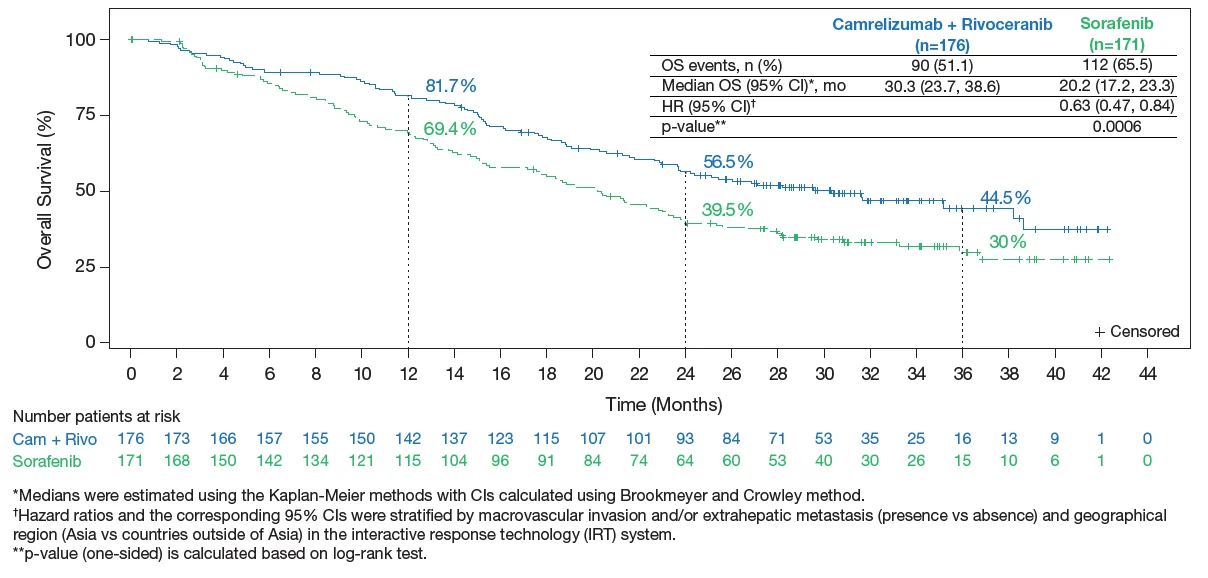
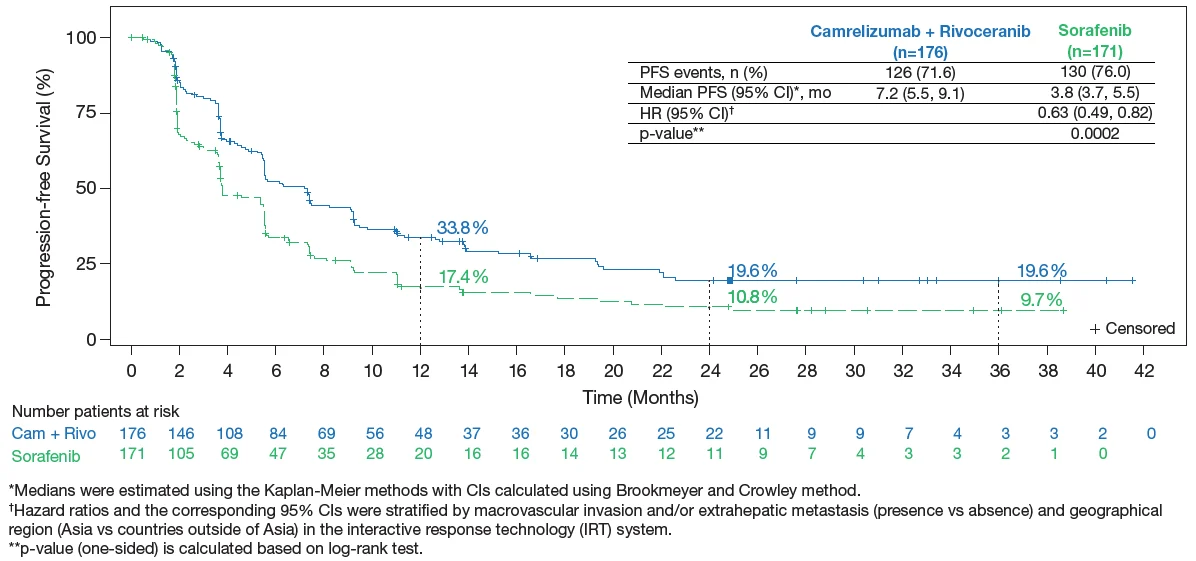
Figure 1. Overall Survival. A) Overall Survival for Patients With Baseline AFP <400 ng/mL. B) Overall Survival for Patients With Baseline AFP ≥400 ng/mL. AFP, alpha-fetoprotein; Cam, camrelizumab; HR, hazard ratio; OS, overall survival; Rivo, rivoceranib.
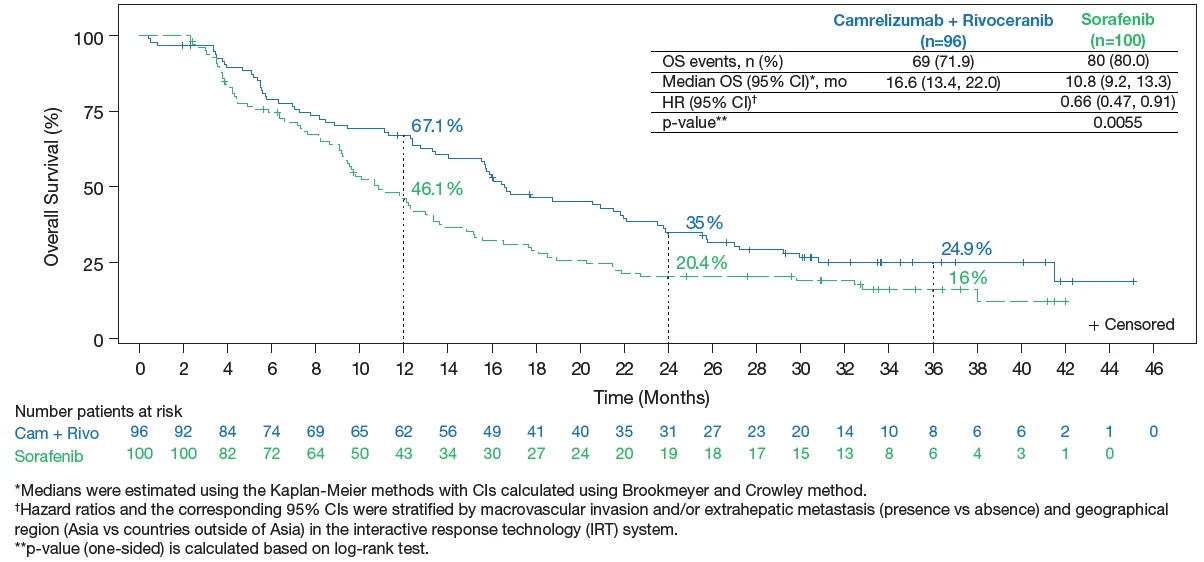
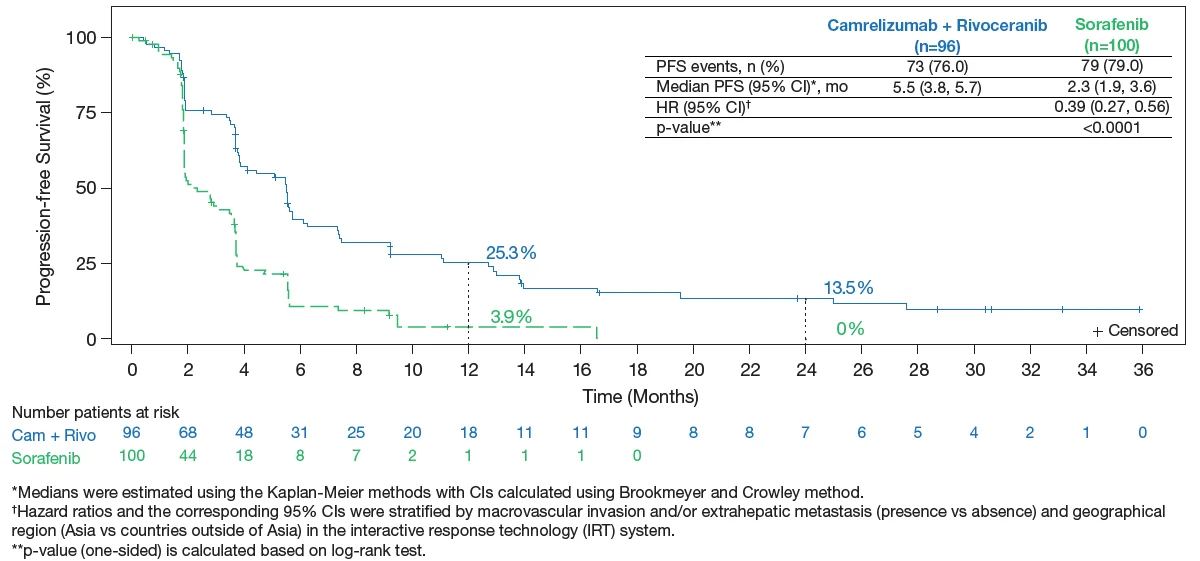
Figure 2. Progression-Free Survival. A) Progression-Free Survival for Patients With Baseline AFP <400 ng/mL by BIRC Assessment (RECIST v1.1). B) Progression-Free Survival for Patients With Baseline AFP ≥400 ng/mL by BIRC Assessment (RECIST v1.1). AFP, alpha-fetoprotein; BIRC, blinded independent review committee; Cam, camrelizumab; HR, hazard ratio; PFS, progression-free survival; RECIST v1.1, Response Evaluation Criteria in Solid Tumors version 1.1; Rivo, rivoceranib.
The DCR per BIRC assessment was 81.8% with camrelizumab plus rivoceranib and 60.2% with sorafenib in patients with baseline AFP level <400 ng/mL. Among those with baseline AFP level ≥400 ng/mL, DCR was 70.8% with camrelizumab plus rivoceranib and 42.0% with sorafenib (Table 2).
Safety
Among patients treated with camrelizumab plus rivoceranib, the most common TRAEs were similar across baseline serum AFP subgroups. The most common any grade and grade 3–4 TRAEs for patients treated with camrelizumab plus rivoceranib and baseline AFP level <400 ng/mL were increased AST, increased alanine aminotransferase (ALT), and decreased platelet count (Table 3).
Table 3: Most Common (≥20%) Any Grade or Grade 3–4 (≥5%) TRAEsa for Patients Treated With Camrelizumab Plus Rivoceranib and Baseline AFP <400 ng/mL (Safety Population)
| TRAE, n (%) | Cam + Rivo (N=176) Any Grade | Cam + Rivo (N=176) Grade 3–4 | Sorafenib (N=169) Any Grade | Sorafenib (N=169) Grade 3–4 |
|---|---|---|---|---|
| AST increased | 75 (42.6) | 27 (15.3) | 67 (39.6) | 8 (4.7) |
| ALT increased | 64 (36.4) | 20 (11.4) | 56 (33.1) | 6 (3.6) |
| Platelet count decreased | 61 (34.7) | 21 (11.9) | 59 (34.9) | 2 (1.2) |
| Blood bilirubin increased | 59 (33.5) | 9 (5.1) | 49 (29.0) | 2 (1.2) |
| Proteinuria | 40 (22.7) | 6 (3.4) | 51 (30.2) | 3 (1.8) |
| White blood cell count decreased | 37 (21.0) | 4 (2.3) | 21 (12.4) | 3 (1.8) |
| Neutrophil count decreased | 36 (20.5) | 9 (5.1) | 14 (8.3) | 0 |
| GGT increased | 35 (19.9) | 15 (8.5) | 33 (19.5) | 14 (8.3) |
aTRAEs include adverse events related to both camrelizumab plus rivoceranib or sorafenib. AFP, alpha-fetoprotein; ALT, alanine aminotransferase; AST, aspartate aminotransferase; Cam, camrelizumab; GGT, gamma-glutamyl transferase; Rivo, rivoceranib; TRAE, treatment-related adverse event.
The most common any grade and grade 3–4 TRAEs for patients treated with camrelizumab plus rivoceranib and baseline AFP level ≥400 ng/mL were increased AST, increased ALT, and increased blood bilirubin (Table 4).
Table 4: Most Common (≥20%) Any Grade or Grade 3–4 (≥5%) TRAEsa for Patients Treated With Camrelizumab Plus Rivoceranib and Baseline AFP ≥400 ng/mL (Safety Population)
| TRAE, n (%) | Cam + Rivo (N=96) Any Grade | Cam + Rivo (N=96) Grade 3–4 | Sorafenib (N=100) Any Grade | Sorafenib (N=100) Grade 3–4 |
|---|---|---|---|---|
| AST increased | 37 (38.5) | 9 (9.4) | 34 (34.0) | 6 (6.0) |
| ALT increased | 29 (30.2) | 8 (8.3) | 25 (25.0) | 2 (2.0) |
| Blood bilirubin increased | 24 (25.0) | 6 (6.3) | 26 (26.0) | 2 (2.0) |
| GGT increased | 13 (13.5) | 6 (6.3) | 16 (16.0) | 5 (5.0) |
| Platelet count decreased | 23 (24.0) | 4 (4.2) | 31 (31.0) | 2 (2.0) |
aTRAEs include adverse events related to both camrelizumab plus rivoceranib or sorafenib.
AFP, alpha-fetoprotein; ALT, alanine aminotransferase; AST, aspartate aminotransferase; Cam, camrelizumab; GGT, gamma-glutamyl transferase; Rivo, rivoceranib; TRAE, treatment-related adverse event.
Discussion
In this post hoc exploratory analysis of CARES-310, camrelizumab plus rivoceranib was associated with improved OS and PFS versus sorafenib in first-line unresectable HCC, irrespective of baseline AFP level. Although efficacy outcomes by AFP subgroup were previously reported in the primary CARES-310 publication, the present analysis provides a dedicated evaluation of efficacy and safety according to baseline AFP level. These findings suggest that the clinical benefit of camrelizumab plus rivoceranib is maintained across AFP-defined subgroups and support the activity of this combination in patients with both lower and higher AFP levels.
In addition to demonstrating consistent efficacy across AFP subgroups, the safety profile of camrelizumab plus rivoceranib was generally similar regardless of baseline AFP level, with no new safety signals observed. These findings support a consistent benefit-risk profile across AFP-defined patient subgroups.
AFP has long been used as a prognostic marker for HCC, with levels higher than 400 ng/mL generally linked to more aggressive disease and poorer outcomes, although the biological basis for this threshold is unclear13,14. In the REACH trial that evaluated ramucirumab versus placebo following first-line sorafenib for advanced HCC, no significant survival benefit was observed in the overall population15. However, a greater survival benefit was observed among patients with elevated AFP. This observation led to the REACH-2 trial, which prospectively enrolled patients with advanced HCC and AFP ≥400 ng/mL and demonstrated significant improvements in both OS and PFS with ramucirumab compared with placebo16. These findings established AFP ≥400 ng/mL as a predictive biomarker for ramucirumab in the second-line advanced HCC setting.
In contrast, in the frontline setting, our findings demonstrate that the survival benefit of camrelizumab plus rivoceranib is observed regardless of baseline AFP level, with improvements in both OS and PFS across subgroups. Among patients with baseline AFP <400 ng/mL, camrelizumab plus rivoceranib was associated with improved OS (HR, 0.63) and PFS (HR, 0.63) compared with sorafenib. In patients with baseline AFP ≥400 ng/mL, the combination similarly improved OS (HR, 0.66) and showed a more pronounced benefit in PFS (HR, 0.39) versus sorafenib. These findings are consistent with the established prognostic role of AFP and demonstrate that treatment benefit with camrelizumab plus rivoceranib was observed in both AFP subgroups. Because this exploratory analysis was not designed to formally assess treatment-by-AFP interaction, no conclusions regarding the predictive value of AFP can be drawn. Emerging data support the role of dynamic AFP changes, particularly early AFP decline, as a marker associated with radiographic response and improved outcomes across systemic therapies including immune checkpoint inhibitor–based regimens. In a retrospective cohort study of patients with unresectable HCC treated with immune checkpoint inhibitors (largely in combination with tyrosine kinase inhibitors or locoregional therapies), early AFP decline (>15% within 3 months) was strongly associated with disease control and independently predicted improved OS and PFS17,18. Similarly, post hoc analyses of the CELESTIAL and REACH trials demonstrated that on-treatment AFP kinetics were associated with clinical outcomes in patients treated with cabozantinib and ramucirumab, respectively, supporting the potential utility of dynamic AFP assessment as a complementary biomarker19,20. However, both studies concluded that prospective validation is warranted before AFP kinetics are used to guide clinical decision-making. These findings suggest that serial assessment of AFP during treatment may provide additional prognostic and predictive information beyond baseline AFP. However, AFP kinetics were not evaluated in the present post hoc analysis because longitudinal AFP measurements were not available. Therefore, future prospective studies incorporating both baseline AFP and dynamic AFP changes may further refine patient stratification and improve assessment of treatment benefit of camrelizumab plus rivoceranib.
Despite advances in systemic therapy, there remain no prospectively validated predictive biomarkers for response to immunotherapy-based combinations in the first-line HCC setting. The observation of treatment benefit across both AFP subgroups highlights the need for continued development of validated predictive biomarkers.
This analysis has several limitations, including its post hoc nature and limited power for subgroup comparisons. However, the consistent survival benefit observed across AFP subgroups aligns with the results of the primary CARES-310 trial. Additional limitations include the absence of formal treatment-by-AFP interaction testing, the use of a single AFP cutoff without assessment of AFP kinetics, and the predominantly Asian/HBV study population, which may limit generalizability to broader patient populations. Given the exploratory post hoc design, these findings are hypothesis-generating rather than confirmatory and should be validated in future prospective studies specifically designed to assess the influence of baseline AFP on treatment outcomes.
AFP remains an important prognostic marker. In this exploratory analysis, clinical benefit with camrelizumab plus rivoceranib versus sorafenib was observed regardless of baseline AFP subgroup. Additional studies specifically designed to evaluate predictive biomarkers are warranted.
Additional Information
Acknowledgments
We thank all the patients who participated in the trial, along with their families and caregivers; the investigators and trial-site personnel; and Olivia Adams, PharmD, CMPP, of The Phillips Group Oncology Communications, Inc. for medical writing assistance.
Funding
This study was funded by Jiangsu Hengrui Pharmaceuticals Co., Ltd. and Elevar Therapeutics. The Phillips Group Oncology Communications, Inc. provided professional assistance with writing and editorial assistance. Financial support for writing and editorial assistance was provided by Elevar Therapeutics.
Ethics Approval
The study protocol was approved by the Alpha Institutional Review Board and conducted in compliance with the study protocol, the International Standard of Good Clinical Practice, the ethical principles of the Declaration of Helsinki, and applicable regulatory requirements. All patients provided written informed consent prior to enrollment.
License
© Author(s) 2026.
This is an open-access article distributed under the terms of the Creative Commons Attribution 4.0 International License (CC BY 4.0), which permits unrestricted use, distribution, and reproduction in any medium, and unrestricted adaptation and reuse, including for commercial purposes, provided you give appropriate credit to the original author(s) and the source, provide a link to the Creative Commons license, and indicate if changes were made.
To view a copy of this license, visit https://creativecommons.org/licenses/by/4.0/.
References
-
Abboud Y, Ismail M, Khan H, et al. Hepatocellular carcinoma incidence and mortality in the USA by sex, age, and race: a nationwide analysis of two decades. J Clin Transl Hepatol. 2024;12(2):172-81.
-
Singal AG, Llovet JM, Yarchoan M, et al. AASLD practice guidance on prevention, diagnosis, and treatment of hepatocellular carcinoma. Hepatology. 2023;78(6):1922-65.
-
Ahn JC, Lee YT, Agopian VG, et al. Hepatocellular carcinoma surveillance: current practice and future directions. Hepatoma Res. 2022;8:10.
-
Yeo YH, Lee YT, Tseng HR, et al. Alpha-fetoprotein: past, present, and future. Hepatol Commun. 2024;8(5).
-
Qin S, Chan SL, Gu S, et al. Camrelizumab plus rivoceranib versus sorafenib as first-line therapy for unresectable hepatocellular carcinoma (CARES-310): a randomised, open-label, international phase 3 study. Lancet. 2023;402(10408):1133-46.
-
Qin S, Gu S, Chan SL, et al. Camrelizumab plus rivoceranib versus sorafenib as first-line therapy for unresectable hepatocellular carcinoma (CARES-310): final analysis of a randomised, open-label, international, phase 3 study. Lancet Oncol. 2025;26(12):1598-611.
-
Cancer of the Liver Italian Program (CLIP) Investigators. A new prognostic system for hepatocellular carcinoma: a retrospective study of 435 patients: the Cancer of the Liver Italian Program (CLIP) investigators. Hepatology. 1998;28(3):751-5.
-
Tangkijvanich P, Anukulkarnkusol N, Suwangool P, et al. Clinical characteristics and prognosis of hepatocellular carcinoma: analysis based on serum alpha-fetoprotein levels. J Clin Gastroenterol. 2000;31(4):302-8.
-
Zhang XF, Meng B, Qi X, et al. Prognostic factors after liver resection for hepatocellular carcinoma with hepatitis B virus-related cirrhosis: surgeon’s role in survival. Eur J Surg Oncol. 2009;35(6):622-8.
-
Mailey B, Artinyan A, Khalili J, et al. Evaluation of absolute serum alpha-fetoprotein levels in liver transplant for hepatocellular cancer. Arch Surg. 2011;146(1):26-33.
-
Zhou J, Sun HC, Wang Z, et al. Guidelines for diagnosis and treatment of primary liver cancer in China (2017 Edition). Liver Cancer. 2018;7(3):235-60.
-
Brookmeyer R, Crowley J. A confidence interval for the median survival time. Biometrics. 1982;38(1):29-41.
-
Hoshida Y, Nijman SM, Kobayashi M, et al. Integrative transcriptome analysis reveals common molecular subclasses of human hepatocellular carcinoma. Cancer Res. 2009;69(18):7385-92.
-
European Association for the Study of the Liver. EASL clinical practice guidelines on the management of hepatocellular carcinoma. J Hepatol. 2025;82(2):315-74.
-
Zhu AX, Park JO, Ryoo BY, et al. Ramucirumab versus placebo as second-line treatment in patients with advanced hepatocellular carcinoma following first-line therapy with sorafenib (REACH): a randomised, double-blind, multicentre, phase 3 trial. Lancet Oncol. 2015;16(7):859-70.
-
Zhu AX, Kang YK, Yen CJ, et al. Ramucirumab after sorafenib in patients with advanced hepatocellular carcinoma and increased α-fetoprotein concentrations (REACH-2): a randomised, double-blind, placebo-controlled, phase 3 trial. Lancet Oncol. 2019;20(2):282-96.
-
Hsu WF, Wang HW, Chen CK, et al. Alpha-fetoprotein response predicts treatment outcomes in patients with unresectable hepatocellular carcinoma receiving immune checkpoint inhibitors with or without tyrosine kinase inhibitors or locoregional therapies. Am J Cancer Res. 2021;11(12):6173-87.
-
Zhu AX, Dayyani F, Yen CJ, et al. Alpha-fetoprotein as a potential surrogate biomarker for atezolizumab + bevacizumab treatment of hepatocellular carcinoma. Clin Cancer Res. 2022;28(16):3537-45.
-
Kelley RK, Meyer T, Rimassa L, et al. Serum alpha-fetoprotein levels and clinical outcomes in the phase III CELESTIAL study of cabozantinib versus placebo in patients with advanced hepatocellular carcinoma. Clin Cancer Res. 2020;26(18):4795-804.
-
Chau I, Park JO, Ryoo BY, et al. Alpha-fetoprotein kinetics in patients with hepatocellular carcinoma receiving ramucirumab or placebo: an analysis of the phase 3 REACH study. Br J Cancer. 2018;119(1):19-26.
How to Cite
Kim R, Shi W, Wu X, Meng X, Ryan K, Chan S, et al. Association of Alpha-Fetoprotein and Clinical Outcomes in Patients with Unresectable Hepatocellular Carcinoma Treated with First-Line Camrelizumab Plus Rivoceranib vs Sorafenib: Post Hoc Exploratory Analysis of the CARES-310 Trial. OncoDaily Med J. 2026;3(3). doi:10.69690/ODMJ-001-1026-8138