


Variable-Volume Oncoplastic Reconstruction Using a Modified Würinger Central Pedicle Technique for Upper Quadrants Breast Cancer: a single-center experience


Abstract
Background: Multifocal breast cancer and tumors of the upper breast quadrants frequently require extensive resections associated with breast contour deformity, loss of lower pole projection, and difficulties in maintaining postoperative symmetry. Achieving oncologic radicality while preserving nipple–areola complex (NAC) viability and satisfactory aesthetic outcomes remains technically challenging, particularly in patients with moderate- and large-volume breasts. This study aimed to evaluate a modification of the Würinger central pedicle technique designed for variable-volume resections in patients with multifocal or unifocal T1–T2 breast cancer of the upper breast quadrants.
Methodology: A retrospective single-center analysis included 52 patients treated between 2022 and 2024 at the Specialized Mammology Center of Kyiv. All patients underwent therapeutic Wise-pattern mammoplasty with large-volume lumpectomy, intraoperative frozen-section margin assessment, and immediate reconstruction. A modified Würinger central pedicle technique was used for reconstruction of the tumor-bearing breast in all patients. Contralateral symmetrization was performed according to breast morphology and surgeon preference, using either a modified Würinger central pedicle technique (n = 10) or a superomedial pedicle technique (n = 42). Comparative analyses were performed between these two reconstructive approaches. Resection specimen weight: median 95 g (range 37–216 g). Postoperative complications, oncologic outcomes, and symmetry parameters were analyzed. Patient-reported outcomes were evaluated using the BREAST-Q questionnaire. Surgeon-related operative workload was assessed using the SURG-TLX questionnaire and compared between bilateral Würinger reconstruction and contralateral superomedial pedicle symmetrization.
Results: Negative surgical margins were achieved in 47 patients (90.4%) during initial frozen-section analysis, whereas additional cavity shave excision enabled secondary margin clearance in all remaining cases. No conversion to mastectomy was required. NAC viability was preserved in all patients, with no cases of NAC necrosis. Fat necrosis occurred in 7 patients (13.5%), delayed wound healing in 3 patients (5.8%), seroma in 4 patients (7.7%), hematoma in 2 patients (3.8%), and T-junction wound dehiscence in 5 patients (9.6%). BREAST-Q analysis demonstrated significant postoperative improvement in quality-of-life and satisfaction scores (p = 0.001), with 45 patients (86.5%) reporting satisfaction with surgical outcomes. SURG-TLX analysis demonstrated significantly lower surgeon-related operative workload during contralateral superomedial pedicle symmetrization compared with bilateral modified Würinger reconstruction (p < 0.001).
Conclusion: The modified Würinger central pedicle technique represents favorable short-term surgical outcomes for breast-conserving surgery in patients with T1–T2 upper quadrant breast cancer, enabling variable-volume resections while preserving NAC viability, breast contour, lower pole projection, and postoperative symmetry. Individualized contralateral symmetrization may reduce surgeon-related operative workload without compromising aesthetic outcomes.
Keywords: Oncoplastic breast surgery, Würinger central pedicle, Multifocal breast cancer, Therapeutic mammoplasty, BREAST-Q, SURG-TLX
Introduction
Breast-conserving surgery has become the standard of care for early-stage breast cancer, with landmark randomized trials demonstrating equivalent long-term survival outcomes compared with mastectomy 1 , 2 .However, multifocal breast cancer and tumors of the upper breast quadrants may require extensive resections, resulting in substantial breast volume loss, contour deformity, and challenges in maintaining postoperative symmetry 3 , 4. These difficulties are particularly pronounced in patients with moderate- to large-volume breasts, where achieving oncologic safety while preserving nipple–areola complex (NAC) viability and satisfactory bilateral aesthetic outcomes remains technically demanding 5 , 6.
Oncoplastic breast-conserving surgery bridges oncologic radicality and acceptable cosmesis by allowing wider excision while simultaneously reshaping the breast 7 , 8. Multiple oncoplastic techniques have been described, including volume displacement and volume replacement approaches, which allow larger resections than standard lumpectomy without compromising aesthetic results 3 , 9 , 10. A meta-analysis by Losken et al. demonstrated that oncoplastic techniques are associated with lower positive-margin and re-excision rates compared with standard breast-conserving surgery alone 7. Similarly, De La Cruz et al. reported favorable oncologic and cosmetic outcomes in a systematic review of oncoplastic approaches 4.
Among volume-displacement techniques, therapeutic mammoplasty using reduction patterns has gained considerable attention 11. The Wise-pattern approach, in particular, allows versatile access to multiple breast quadrants and enables simultaneous contralateral symmetrization 12. However, maintaining NAC vascularity during extensive parenchymal mobilization remains a critical concern, as compromised NAC perfusion represents one of the most devastating complications of oncoplastic surgery 13.
The Würinger central pedicle technique, originally described for reduction mammoplasty, is based on the ligamentous suspension of the mammary gland and the neurovascular anatomy of the horizontal septum 14. This septum provides a reliable neurovascular supply to the NAC through vessels and nerves coursing within the ligamentous suspension, forming a central pedicle that is distinct from conventional superior, inferior, or superomedial pedicle designs 15. Despite its anatomical advantages, septum-based central pedicle approaches remain relatively underused in breast-conserving surgery, particularly in cases involving multifocal disease and variable-volume resections of the upper breast quadrants 16 , 17.
Several authors have explored central or septum-based pedicle modifications in aesthetic and oncoplastic breast surgery, demonstrating reliable NAC sensation or viability and favorable aesthetic outcomes 13 , 16 , 17. However, their systematic application in upper-quadrant oncoplastic reconstruction remains limited. The upper inner and upper central quadrants represent particularly challenging anatomical locations because large resections in these regions may compromise breast projection, upper pole contour, and NAC vascularity 3 , 8. In addition, achieving contralateral symmetry may require technically demanding symmetrization procedures that increase operative complexity and surgeon workload 11 , 12 , 18 , 19. Therefore, there remains a need for reproducible oncoplastic approaches capable of combining oncologic radicality with reliable aesthetic outcomes while maintaining procedural efficiency. Assessment of patient-reported outcomes using validated instruments such as the BREAST-Q 22 , 23 , 24 and surgeon-reported operative workload using the SURG-TLX 25 can provide a comprehensive evaluation of the technique’s impact on both patients and surgeons. This study aimed to evaluate a modification of the Würinger central pedicle technique designed to facilitate resections of varying volume in patients with multifocal or large tumors of the upper breast quadrants while preserving NAC viability and optimizing bilateral aesthetic outcomes. The primary objective was to improve quality of life and aesthetic outcomes in patients with upper-quadrant tumors treated by oncoplastic breast-conserving surgery. The secondary objective was to reduce postoperative complications while preserving oncologic safety and NAC viability. The tertiary objective was to decrease surgeon operative workload during reconstructive and contralateral symmetrization procedures without compromising surgical or aesthetic outcomes.
Methodology
A retrospective single-center analysis was conducted of 52 patients with multifocal or unifocal breast cancer of the upper breast quadrants with T1–T2 tumors, treated between 2022 and 2024 by a single surgical team at the Specialized Mammology Center of Kyiv. Demographic characteristics, clinicopathological parameters, and perioperative patient-related factors were comprehensively analyzed in all study participants. Preoperative diagnosis was established in all patients by image-guided core needle biopsy. Histopathological evaluation included tumor type, histological grade, estrogen receptor (ER) status, progesterone receptor (PR) status, HER2 status, and Ki-67 proliferation index. Patients who received neoadjuvant chemotherapy underwent clip placement within the primary tumor before initiation of systemic treatment to facilitate subsequent surgical localization. Clinical staging was performed using physical examination and breast imaging, including mammography, ultrasound, and magnetic resonance imaging when indicated. Final pathological staging was determined according to the AJCC TNM classification following surgical treatment. Eligible patients had moderate- to large-volume breasts and tumors located in the upper inner, upper outer, or upper central breast quadrants that were considered suitable for breast-conserving surgery with immediate volume-displacement reconstruction. Patients were considered candidates for the modified Würinger central pedicle technique when preservation of the nipple–areola complex (NAC) was oncologically feasible and sufficient residual breast volume was available for parenchymal rearrangement. Exclusion criteria included multicentric disease, small breast volume unsuitable for therapeutic mammoplasty, prior breast irradiation, and the presence of homologous recombination repair (HRR) gene mutations. Patients with known pathogenic HRR gene mutations were excluded because hereditary breast cancer syndromes may influence surgical treatment planning, including consideration of bilateral or risk-reducing mastectomy, thereby introducing selection bias unrelated to evaluation of the reconstructive technique. All patients underwent oncoplastic breast-conserving surgery in the form of therapeutic Wise-pattern mammoplasty with resections of varying volume, including lumpectomy specimens ranging from 37 to 216 g, intraoperative margin assessment, and immediate reconstruction. The extent of resection was individualized based on tumor size, focality, and breast anatomy and therefore did not correspond to a standardized segmentectomy or quadrantectomy. Among the 52 included patients, 39 (75 %) had multifocal breast cancer, whereas 13 (25 %) had unifocal disease. Within the multifocal cohort, 27 patients (69.2%) presented with two tumor foci and 12 patients (30.8%) had three tumor foci. Tumor location involved the upper outer quadrant in 38 patients (73.1%) and the upper inner quadrant in 14 patients (26.9%). Patients with multicentric disease involving separate breast quadrants were excluded from the study.
A modified Würinger central pedicle technique was used for reconstruction of the tumor-bearing breast in all patients. Contralateral symmetrization was performed according to breast morphology and surgeon preference, using either a modified Würinger central pedicle technique (n = 10) or a superomedial pedicle technique (n = 42). Comparative analyses were performed between these two reconstructive approaches. Preoperative surgical markings were performed in all patients prior to surgery to assess breast symmetry, determine the planned resection volume, and optimize nipple–areola complex positioning and postoperative aesthetic outcomes. Under ultrasound guidance, tumor dimensions and localization were evaluated preoperatively to define the extent of resection and accurately determine surgical margins.
Following preoperative Wise-pattern markings, a modified Würinger central pedicle was designed to incorporate the nipple–areola complex (NAC) together with the central glandular tissue supplied by the Würinger septum. After de-epithelialization, the pedicle was developed by elevating the glandular flap from the surrounding breast parenchyma. In contrast to the classical Würinger technique, the inferior parenchymal attachments and perforating vessels arising from the lower pole were selectively divided, while preserving the central septal neurovascular bundle supplying the NAC. This modification increased pedicle mobility and arc of rotation, allowing transposition of the central glandular flap into defects created after wide excision of tumors located in the upper breast quadrants. The mobilized pedicle was then rotated and advanced into the resection cavity, providing volume replacement and restoration of breast contour. Internal parenchymal sutures were used to secure the flap and reconstruct breast projection, whereas the remaining glandular pillars were approximated to achieve lower-pole support and symmetry. The viability of the pedicle and perfusion of the NAC were assessed intraoperatively before definitive closure. (Figure 1).
Figure 1. Surgical technique for different tumor localizations: (A) upper inner quadrant; (B) upper outer quadrant; (C) flap fixation.
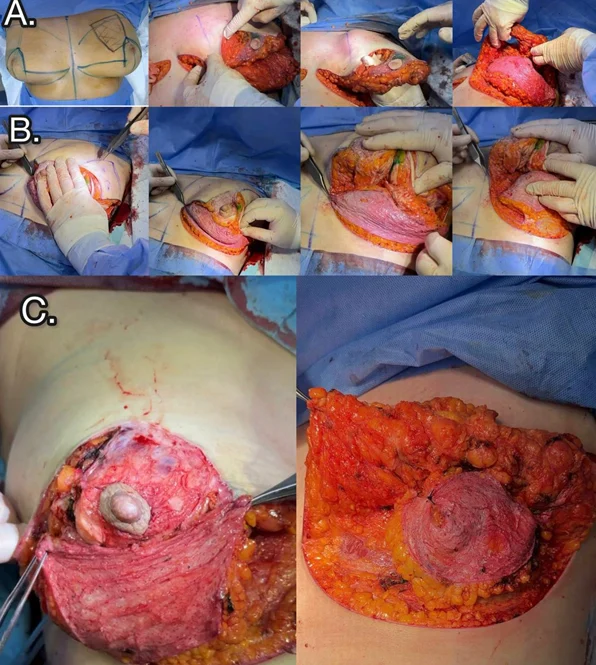
The modification consisted of releasing the inferior vascular and parenchymal attachments of the conventional Würinger central pedicle while preserving the horizontal septum and its associated neurovascular structures. This maneuver transformed the pedicle into a more mobile central glandular flap with an extended rotational capacity, enabling reconstruction of large upper-quadrant defects that would otherwise exceed the reach of a standard central pedicle. Preservation of the septal blood supply maintained reliable NAC perfusion despite substantial tissue transposition. The study was conducted in accordance with the Declaration of Helsinki and approved by the institutional ethics committee of the Specialized Mammology Center of Kyiv. Written informed consent was obtained from all patients prior to surgical treatment and inclusion in the study.
All resection specimens were intraoperatively weighed and analyzed. Resection margins were assessed intraoperatively by frozen-section examination and subsequently confirmed on final permanent histopathological analysis. Negative margins were defined as “no ink on tumor” for invasive carcinoma and a minimum margin width of 2 mm for ductal carcinoma in situ, in accordance with consensus margin guidelines 20 , 21.
When positive or close margins were identified intraoperatively, additional cavity shave excisions were performed during the same operation and reassessed until margin clearance was achieved. Symmetry assessment included evaluation of the suprasternal notch-to-nipple distance, nipple-to-inframammary fold distance, breast base width, breast projection, NAC position, inframammary fold level, and lower-pole symmetry. All patients received adjuvant radiotherapy. The median follow-up duration was 12 months (range, 9–24 months). During follow-up, patients underwent regular clinical and radiological surveillance to evaluate oncologic safety, surgical outcomes, and patient-reported satisfaction. Disease stage, administration of neoadjuvant chemotherapy, postoperative complications, and patient-related risk factors were analyzed. Early and late postoperative complications were systematically recorded, including wound-healing disorders, seroma, hematoma, infectious complications, fat necrosis, partial or total NAC necrosis, T-junction wound dehiscence, and need for reoperation.
Patient-reported outcomes were assessed using the BREAST-Q breast-conserving therapy module 22 , 23 , 24. Raw scores were converted to a standardized scale ranging from 0 to 100 according to the BREAST-Q scoring manual, with higher scores indicating better outcomes and greater patient satisfaction. Questionnaires were administered preoperatively and at 6 and 12 months postoperatively. Only completed questionnaires were included in the analysis. Longitudinal comparisons between assessment time points were performed using paired statistical testing, with p values < 0.05 considered statistically significant. Comparative analysis of surgeon-related workload included patients who underwent bilateral modified Würinger central pedicle reconstruction (n = 10) and patients who underwent modified Würinger reconstruction of the tumor-bearing breast with contralateral superomedial pedicle symmetrization (n = 42). Statistical analysis was performed using the paired Student’s t-test. Surgeon-related operative workload was assessed using the validated SURG-TLX questionnaire immediately after completion of each surgical procedure 25. Ten procedures involving bilateral modified Würinger central pedicle reconstruction were compared with 42 procedures involving modified Würinger reconstruction of the tumor-bearing breast and contralateral superomedial pedicle symmetrization. Because different patients were included in each group, comparisons were performed as independent-group analyses using Student’s t-test. The SURG-TLX assessment was considered exploratory and hypothesis-generating regarding the influence of reconstructive strategy on surgeon workload.
Both the BREAST-Q and SURG-TLX questionnaires were used as part of institutional clinical outcome assessment at the Specialized Mammology Center of Kyiv. The technique was indicated in patients without nipple–areola complex involvement and with sufficient breast volume.
Results
Patient and Tumor Characteristics
Between 2022 and 2024, a total of 52 patients with multifocal or unifocal breast cancer of the upper breast quadrants underwent oncoplastic breast-conserving surgery using the modified Würinger central pedicle technique. Among the study population, 39 patients (75 %) had multifocal breast cancer and 13 patients (25 %) had unifocal disease. Of the multifocal tumors, 27 (69.2%) consisted of two tumor foci, whereas 12 (30.8%) consisted of three tumor foci. Tumors were located in the upper outer quadrant in 38 patients (73.1%) and in the upper inner quadrant in 14 patients (26.9%). No patients with multicentric disease were included in the present study. Among the 50 patients with invasive breast cancer, clinical tumor stage at presentation was cT1 in 35 (70 %) patients, cT2 in 14 (28 %), and cT3 in 1 (2 %). Clinical nodal status was cN0 in 39 (78 %) patients and cN1 in 11 (22 %), while all patients had non-metastatic disease (cM0). Thirty-nine patients underwent upfront surgery, with pathological staging demonstrating pT1 disease in 26 (66.7%) and pT2 disease in 13 (33.3%) patients; all patients in this subgroup were pathologically node-negative (pN0). Eleven patients received neoadjuvant chemotherapy. Pretreatment staging included cT1 in 8 (72.7%), cT2 in 2 (18.2%), and cT3 in 1 (9.1%) patient, while clinical nodal status was cN0 in 2 (18.2%) and cN1 in 9 (81.8%). Following neoadjuvant chemotherapy, pathological staging demonstrated ypTis in 2 (18.2%), ypT0 in 5 (45.5%), ypT1 in 3 (27.3%), and ypT2 in 1 (9.1%) patient; pathological nodal status was ypN0 in 3 (27.3%) and ypN1 in 8 (72.7%) patients. Two patients with pure ductal carcinoma in situ (DCIS) were not included in the invasive TNM staging analysis. Axillary management was performed according to the initial nodal status and institutional treatment protocol. Overall, sentinel lymph node biopsy was performed in 42 patients (80.8%), while axillary lymph node dissection was required in 8 patients (15.4%). Two patients (3.8%) with pure ductal carcinoma in situ did not undergo an axillary procedure. Among patients with invasive breast cancer, 39 (78 %) were clinically node-negative (cN0) and 11 (22 %) were clinically node-positive (cN1). Following surgical treatment, 42 patients (84 %) were pathologically node-negative, whereas residual nodal disease was identified in 8 patients (16 %). The mean age was 47 years (range, 31–64 years), and the mean BMI was 25.2 kg/m² (range, 19.4–31.1 kg/m²). Most tumors were stage IA (57.7%) or stage IIA (30.8%), whereas stage IIB disease accounted for 11.5% of cases. All 52 patients underwent preoperative histological verification by core needle biopsy. Tumor biology assessment included histological type, tumor grade, ER, PR, HER2, and Ki-67 status. Two patients (3.8%) had pure DCIS, which was localized preoperatively under radiologic guidance on the day of surgery. Neoadjuvant chemotherapy (NACT) was administered to 11 patients (21.2%), including patients with HER2-positive disease, triple-negative breast cancer, and selected luminal tumors with nodal involvement. Eleven patients (21.2%) received neoadjuvant chemotherapy prior to surgery. Among them, five patients (45.5%) had triple-negative breast cancer, three (27.3%) had HER2-positive disease, and three (27.3%) had luminal B breast cancer. Patients with HER2-positive tumors received neoadjuvant docetaxel, carboplatin, trastuzumab, and pertuzumab (TCHP). Patients with triple-negative breast cancer received the KEYNOTE-522 regimen consisting of pembrolizumab combined with carboplatin and paclitaxel followed by anthracycline- and cyclophosphamide-based chemotherapy. Patients with luminal B tumors received anthracycline- and taxane-based chemotherapy (AC-T). Radiological assessment demonstrated a complete response (CR) in three patients (27.3%) and a partial response (PR) in eight patients (72.7%). Pathological assessment revealed a pathological complete response (pCR) in three patients (27.3%), while the remaining eight patients (72.7%) achieved a partial pathological response. Before NACT, clip markers were placed intratumorally in all patients and in biopsied axillary lymph nodes when metastatic nodal involvement was confirmed. All patients underwent radiological response assessment before surgery. Clip-guided localization was used when required to identify the tumor bed following treatment response. Among patients treated with NACT, 8/11 underwent sentinel lymph node biopsy following complete nodal response; 5/8 required completion axillary lymph node dissection (levels I–II). The remaining 3/11 patients underwent primary axillary lymph node dissection (levels I–II) without preceding sentinel lymph node biopsy. No patient required conversion to mastectomy following neoadjuvant therapy. Clinicopathologic characteristics are summarized in Table 1.
Table 1. Patient demographic and clinicopathological characteristics (n = 52)
| Parameter | Value |
|---|---|
| Total patients | 52 |
| Mean age, years (range) | 47 (31-64) |
| Mean BMI, kg/m² (range) | 25.2 (19.4-31.1) |
| C cup | 34 (65.4%) |
| D cup | 18 (34.6%) |
| Clinical stage IA | 28 (56 %) |
| Clinical stage IIA | 16 (32 %) |
| Clinical stage IIB | 6 (12%) |
| Invasive carcinoma | 50 (96.2%) |
| Pure DCIS | 2 (3.8%) |
| Tumor grade G1 | 12 (23.1%) |
| Tumor grade G2 | 28 (53.8%) |
| Tumor grade G3 | 12 (23.1%) |
| Luminal A (invasive carcinoma, n = 50) | 17 (34.0%) |
| Luminal B, HER2-negative (invasive carcinoma, n = 50) | 25 (50.0%) |
| HER2-positive (invasive carcinoma, n = 50) | 3 (6.0%) |
| Triple-negative (invasive carcinoma, n = 50) | 5 (10.0%) |
| Neoadjuvant chemotherapy | 11 (21.2%) |
| Intratumoral clip placement after NACT | 11/11 (100%) |
| Clip placement in biopsied positive axillary lymph node | 5/5 (100%) |
| SLNB after NACT | 8/11 (72.7%) |
| Completion ALND I-II after SLNB | 5/8 (62.5%) |
| Primary ALND I-II without SLNB | 3/11 (27.3%) |
| Resection specimen weight, g, median (range) | 95 (37-216) |
| Primary negative margins on frozen section | 47 (90.4%) |
| Additional shave excision required | 5 (9.6%) |
| Conversion to mastectomy | 0 |
Oncologic Outcomes
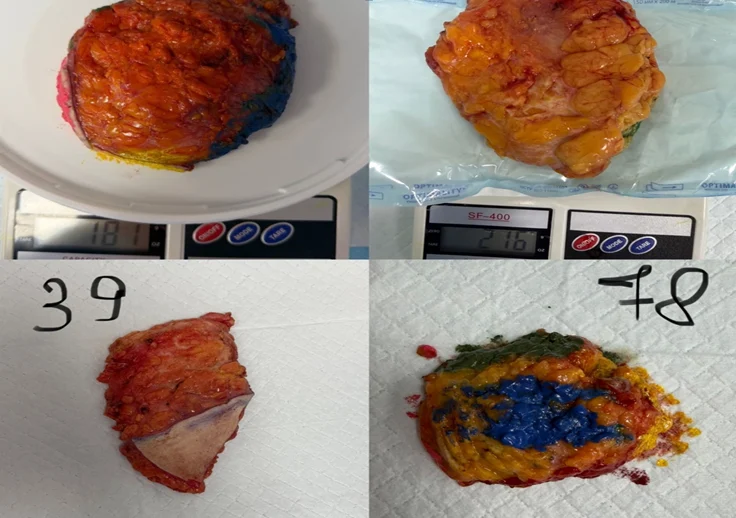
Resection specimen weight ranged from 37 to 216 g, reflecting variable resection volumes according to tumor size, multifocality, and breast anatomy (Figure 2).
Figure 2. Variability of resection volume.
Intraoperative frozen-section assessment demonstrated negative margins in 47 patients (90.4%). Five patients (9.6%) required additional cavity shave excision because of positive or close margins. Final permanent histopathological examination confirmed negative margins in all patients. No patient required conversion to mastectomy. At a median follow-up of 12 months (range, 9–24 months), no local recurrences were observed.
Surgical and Reconstructive Outcomes
In the bilateral modified Würinger pedicle group, fat necrosis occurred in 2 patients (20.0%), delayed wound healing in 1 (10.0%), seroma in 1 (10.0%), hematoma in 1 (10.0%), and minor T-junction wound dehiscence in 1 (10.0%). No patient required reoperation. In the contralateral superomedial pedicle symmetrization group, fat necrosis occurred in 5 patients (11.9%), delayed wound healing in 2 (4.8%), seroma in 3 (7.1%), hematoma in 1 (2.4%), and T-junction wound dehiscence in 4 (9.5%). One patient required reoperation because of wound-related complications. One patient required reoperation because of wound-related complications. In the contralateral superomedial pedicle symmetrization group, fat necrosis occurred in 2 patients (20.0%), whereas delayed wound healing, seroma, hematoma, and T-junction wound dehiscence each occurred in 1 patient (10.0%). No major infectious complications, flap loss, or severe postoperative complications were observed.
Preservation of nipple–areola complex vascularity was achieved in all patients, and no cases of partial or total nipple–areola complex necrosis occurred. Postoperative complications are summarized in Table 2.
Table 2. Postoperative complications by reconstructive approach
| Postoperative complication | Bilateral modified Würinger pedicle (n = 10) | Contralateral superomedial pedicle (n = 42) | Overall (n = 52) |
|---|---|---|---|
| NAC necrosis | 0 | 0 | 0 |
| Fat necrosis | 2 (20.0%) | 5 (11.9%) | 7 (13.5%) |
| Delayed wound healing | 1 (10.0%) | 2 (4.8%) | 3 (5.8%) |
| Seroma | 1 (10.0%) | 3 (7.1%) | 4 (7.7%) |
| Hematoma | 1 (10.0%) | 1 (2.4%) | 2 (3.8%) |
| T-junction wound dehiscence | 1 (10.0%) | 4 (9.5%) | 5 (9.6%) |
| Reoperation | 0 | 1 (2.4%) | 1 (1.9%) |
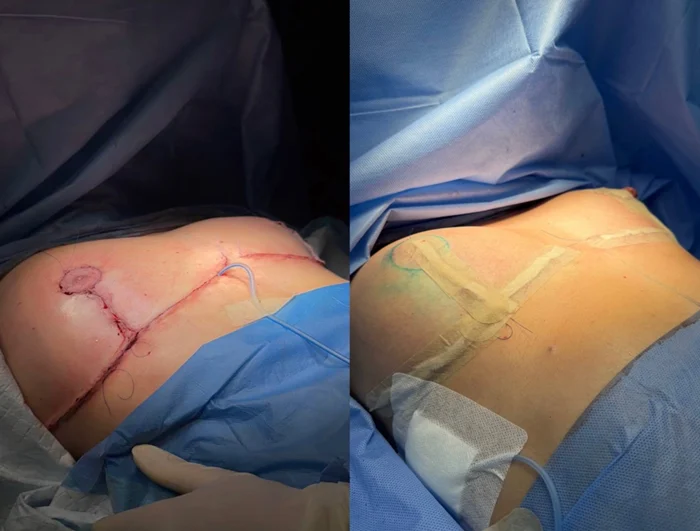
Intraoperative assessment of suprasternal notch-to-nipple distance, nipple-to-inframammary fold distance, and inframammary fold level confirmed stable postoperative symmetry (Figure 3).
Figure 3. Immediate postoperative appearance demonstrating preservation of breast contour.
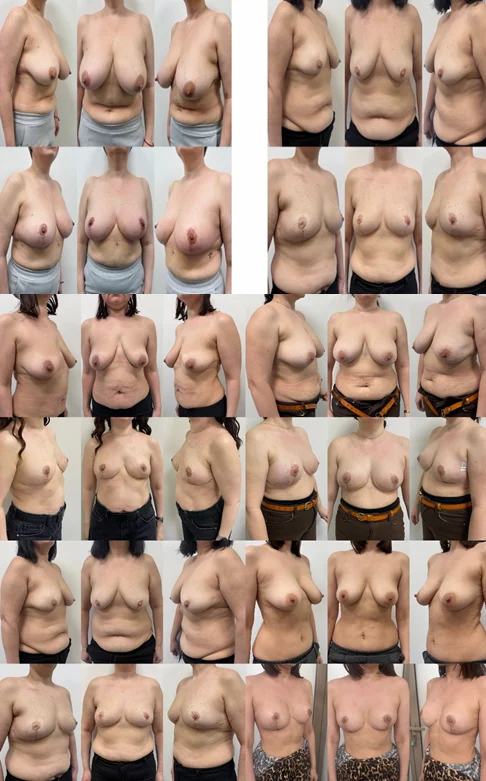
Symmetry analysis demonstrated satisfactory preservation of breast contour, lower pole projection, and nipple–areola complex position throughout follow-up (Figure 4).
Figure 4. Representative postoperative outcomes.
Patient-Reported Outcomes
According to BREAST-Q analysis, 45 patients (86.5%) reported satisfaction with their surgical outcome. Significant improvements were observed in psychosocial well-being, satisfaction with breasts, and overall satisfaction with outcome. BREAST-Q scores demonstrated progressive improvement between baseline, 6-month, and 12-month assessments, with the highest postoperative scores observed in breast satisfaction, psychosocial well-being, and body image domains (Table 3).
Table 3. BREAST-Q questionnaire results
| BREAST-Q Domain | Preoperative | After 6 months | p Value (6 months) | After 12 months | p Value (12 months) |
|---|---|---|---|---|---|
| Psychosocial well-being | 61.4 | 74.8 | 0.012 | 84.2 | 0.001 |
| Sexual well-being | 56.7 | 63.5 | 0.084 | 73.6 | 0.021 |
| Satisfaction with breasts | 58.9 | 78.4 | 0.004 | 86.5 | 0.001 |
| Physical well-being chest | 69.8 | 65.2 | NS | 76.1 | 0.037 |
| Satisfaction with outcome | - | 81.7 | - | 86.5 | 0.001 |
BREAST-Q questionnaires were completed by all 52 patients at baseline and at 6- and 12-month follow-up visits. No questionnaires were missing at any assessment time point.
Surgeon-Reported Outcomes
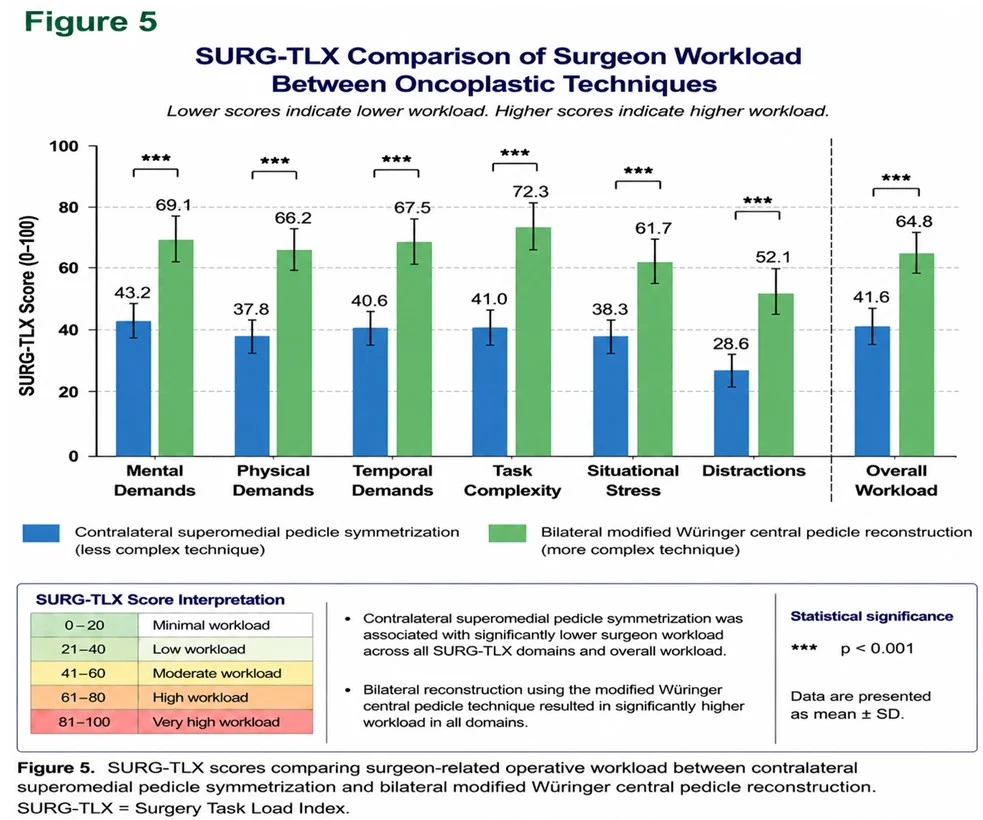
Comparative analysis of surgeon-related operative workload demonstrated significantly lower SURG-TLX scores in patients undergoing contralateral superomedial pedicle symmetrization compared with bilateral modified Würinger central pedicle reconstruction (p < 0.001). The largest differences were observed in task complexity and situational stress. Despite comparable aesthetic outcomes, contralateral superomedial pedicle symmetrization was associated with a lower operative burden while maintaining satisfactory symmetry and high patient satisfaction (Figure 5).
Figure 5. SURG-TLX scores comparing surgeon-related operative workload between contralateral superomedial pedicle symmetrization and bilateral modified Würinger central pedicle reconstruction.
Discussion
The technique appears feasible and was associated with favorable short-term surgical and patient-reported outcomes. Long-term oncologic follow-up is warranted The present study demonstrates that the modified Würinger central pedicle technique is associated with favorable short-term surgical and patient-reported outcomes for breast-conserving surgery in patients with T1–T2 breast cancer of the upper quadrants. The technique enabled variable-volume resections ranging from 37 to 216 g while consistently preserving NAC viability and maintaining satisfactory breast contour and symmetry. These findings are particularly relevant given the well-documented challenges associated with extensive upper-quadrant resections, which frequently lead to breast deformity and loss of projection 3 , 8.
The high rate of negative surgical margins achieved in our series (90.4% on initial frozen section, 100% after cavity shave excision) compares favorably with published oncoplastic series. Clough et al. reported favorable oncologic and cosmetic outcomes using various oncoplastic techniques 8, while Fitoussi et al. achieved 90.4% negative margins in a series of 540 oncoplastic procedures 10. Importantly, no patient in our cohort required conversion to mastectomy, underscoring the oncologic adequacy of this approach even in the setting of multifocal disease. This is consistent with the findings of Silverstein et al., who demonstrated that extreme oncoplasty can extend the indications for breast conservation in selected patients who would otherwise require mastectomy 5.
The absence of NAC necrosis in our series is a notable finding and likely reflects the reliable vascular supply provided by the horizontal septum described by Würinger et al. 14 , 15. The central pedicle design preserves the perforating branches and neural structures that course through the ligamentous suspension of the mammary gland, providing robust NAC perfusion even after extensive parenchymal mobilization. Schlenz et al. demonstrated that central pedicle techniques may preserve NAC sensation more reliably than several other pedicle designs 13, and Kelahmetoglu et al. showed that combining Würinger’s horizontal septum with inferior pedicle techniques can enhance NAC viability 17. Our results extend these findings to the oncoplastic setting, suggesting that the modified Würinger central pedicle provides reliable NAC perfusion even during large-volume oncologic resections.
The overall complication profile in our series was acceptable and consistent with published oncoplastic and therapeutic mammoplasty series. The observed complication rates compare favorably with those reported in contemporary oncoplastic breast surgery reviews, in which fat necrosis, delayed wound healing, seroma formation, and T-junction dehiscence are among the most frequently reported adverse events 4 , 10 , 19. In our cohort, fat necrosis occurred in 13.5% of patients, whereas delayed wound healing, seroma, and hematoma remained uncommon. These findings are likely related to careful preservation of vascularized glandular tissue during flap mobilization and meticulous intraoperative assessment of tissue perfusion.
The absence of nipple–areola complex necrosis is particularly noteworthy given the extent of tissue mobilization required for upper-quadrant reconstruction. Previous studies evaluating septum-based and central pedicle techniques have highlighted the reliability of the vascular anatomy described by Würinger and the favorable perfusion characteristics of septum-based flaps 14 , 15 , 16 , 17. Despite inclusion of patients with recognized risk factors such as elevated BMI, smoking, and diabetes mellitus, no cases of partial or total NAC necrosis were observed in the present series, further supporting the reliability of the modified Würinger central pedicle design.
T-junction wound dehiscence occurred in 9.6% of cases and was managed conservatively without long-term sequelae. This complication rate is comparable to those reported for Wise-pattern therapeutic mammoplasty and reduction-based oncoplastic procedures in contemporary series and systematic reviews 11 , 12 , 19. The occurrence of T-junction breakdown most likely reflects the inherent tension at the convergence of vertical and horizontal scar components rather than a limitation of the pedicle design itself. Likewise, delayed wound healing was predominantly observed in patients with established risk factors, including active smoking and diabetes mellitus, highlighting the importance of patient selection and perioperative risk-factor optimization.
The BREAST-Q results in our series are encouraging and demonstrate significant improvements in patient-reported satisfaction and quality of life at both 6- and 12-month follow-up assessments 22 , 23 , 24. The highest scores were observed in breast satisfaction and psychosocial well-being domains, reflecting the aesthetic benefits of the oncoplastic approach. Notably, physical well-being of the chest showed a transient decrease at 6 months before improving at 12 months, which likely reflects the expected postoperative recovery trajectory. These findings support the usefulness of BREAST-Q as a comprehensive patient-reported outcome measure in this patient population 22 , 23 , 24.
An innovative aspect of our study is the comparative assessment of surgeon-related operative workload using the SURG-TLX questionnaire 25. The significantly lower SURG-TLX scores observed during contralateral superomedial pedicle symmetrization compared with bilateral Würinger reconstruction suggest that using different techniques for each breast may optimize procedural efficiency without compromising aesthetic outcomes. This finding has practical implications for surgical planning: by selecting a less technically demanding technique for the contralateral breast, surgeons may reduce fatigue and cognitive load, potentially improving overall performance during complex bilateral procedures. The concept of surgeon workload as a modifiable factor in surgical outcomes is gaining recognition, and our findings contribute to this emerging area of research.
The present findings should be interpreted in the context of the broader evolution of oncoplastic breast surgery. The seminal works of Clough et al. 3 , 8 and McCulley and Macmillan 9 , 11 established the principles of tumor-location-based oncoplastic planning and therapeutic mammoplasty, and subsequent large series and systematic reviews have confirmed the oncologic safety and cosmetic benefits of these approaches 4 , 7 , 10. Our study contributes to this body of evidence by demonstrating that a modification of the Würinger central pedicle technique can be successfully applied to upper-quadrant tumors requiring variable-volume resections—a clinical scenario that has traditionally posed significant technical challenges 6 , 16 , 17.
Strengths and Limitations
This study has several strengths. First, it provides a detailed description of a reproducible surgical technique based on sound anatomical principles, with comprehensive reporting of oncologic, complication, and patient-reported outcomes. Second, the use of validated outcome instruments (BREAST-Q and SURG-TLX) strengthens the objectivity and comparability of our findings. Third, the assessment of surgeon-related operative workload as a secondary endpoint represents a novel contribution to the oncoplastic surgery literature. Fourth, the inclusion of patients with multifocal disease and variable-volume resections demonstrates the technique’s versatility across a range of clinical scenarios. Finally, the single-surgeon design ensures technical consistency across the entire cohort.
However, several limitations must be acknowledged. The retrospective design introduces inherent selection bias and limits the ability to establish causality. The relatively small sample size of 52 patients may limit the generalizability of our findings and precludes meaningful subgroup analyses. The 12-month median follow-up is relatively short for assessing long-term oncologic outcomes and aesthetic durability; longer follow-up is needed to evaluate local recurrence rates and the stability of cosmetic results over time. The single-center, single-surgeon design, while ensuring technical consistency, limits external validity and generalizability to other surgical teams and settings. Additionally, the SURG-TLX comparison involved a subgroup of only 10 patients treated with bilateral Würinger reconstruction, which is a small comparator group. The SURG-TLX analysis should be interpreted with caution. The comparator group consisted of only 10 patients, limiting statistical power and increasing the possibility of type I error. Furthermore, differences in tumor characteristics, resection volume, operative complexity, and reconstructive requirements may have influenced surgeon workload independently of the reconstructive technique itself. Consequently, these findings should be considered exploratory and hypothesis-generating rather than definitive evidence of superiority of one reconstructive approach over another.
Future prospective, multicenter studies with larger sample sizes and longer follow-up are warranted to confirm these preliminary findings.
Conclusion
The modified Würinger central pedicle technique appears to be technically feasible approach for breast-conserving surgery in patients with multifocal or unifocal T1–T2 breast cancer of the upper breast quadrants and moderate- to large-volume breasts. The technique enabled variable-volume resections while preserving nipple–areola complex viability, maintaining breast contour, lower pole projection, and satisfactory postoperative symmetry. The described approach demonstrated favorable postoperative outcomes, including a high rate of negative surgical margins, low incidence of major complications, absence of nipple–areola complex necrosis, and no need for conversion to mastectomy. Patient-reported outcomes assessed using BREAST-Q revealed high levels of postoperative satisfaction and significant improvement in quality-of-life measures 22 , 23 , 24. Comparative SURG-TLX analysis demonstrated that contralateral symmetrization using a superomedial pedicle technique was associated with significantly lower surgeon-related operative workload compared with bilateral modified Würinger central pedicle reconstruction, while maintaining comparable aesthetic outcomes 25. Further studies with larger cohorts and longer follow-up are required to confirm the long-term oncologic safety and durability of these findings.
License
© Author (s), [2026].
This is an open access article distributed under the terms of the Creative Commons Attribution 4.0 International License (CC BY 4.0), which permits unrestricted use, distribution, and reproduction in any medium, and unrestricted adaptation and reuse, including for commercial purposes, provided you give appropriate credit to the original author(s) and the source, provide a link to the Creative Commons license, and indicate if changes were made.
To view a copy of this license, visit https://creativecommons.org/licenses/by/4.0/.
References
-
Fisher B, Anderson S, Bryant J, Margolese RG, Deutsch M, Fisher ER, et al. Twenty-year follow-up of a randomized trial comparing total mastectomy, lumpectomy, and lumpectomy plus irradiation for the treatment of invasive breast cancer. N Engl J Med. 2002;347(16):1233-1241. doi:10.1056/NEJMoa022152.
-
Veronesi U, Cascinelli N, Mariani L, Greco M, Saccozzi R, Luini A, et al. Twenty-year follow-up of a randomized study comparing breast-conserving surgery with radical mastectomy for early breast cancer. N Engl J Med. 2002;347(16):1227-1232. doi:10.1056/NEJMoa020989.
-
Clough KB, Kaufman GJ, Nos C, Buccimazza I, Sarfati IM. Improving breast cancer surgery: a classification and quadrant per quadrant atlas for oncoplastic surgery. Ann Surg Oncol. 2010;17(5):1375-1391. doi:10.1245/s10434-009-0792-y.
-
De La Cruz L, Blankenship SA, Chatterjee A, Geha R, Nocera N, Czerniecki BJ, et al. Outcomes after oncoplastic breast-conserving surgery in breast cancer patients: a systematic literature review. Ann Surg Oncol. 2016;23(10):3247-3258. doi:10.1245/s10434-016-5313-1.
-
Silverstein MJ, Savalia N, Khan S, Ryan J. Extreme oncoplasty: breast conservation for patients who need mastectomy. Breast J. 2015;21(1):52-59. doi:10.1111/tbj.12356.
-
Clough KB, Lewis JS, Couturaud B, Fitoussi A, Nos C, Falcou MC. Oncoplastic techniques allow extensive resections for breast-conserving therapy of breast carcinomas. Ann Surg. 2003;237(1):26-34. doi:10.1097/00000658-200301000-00005.
-
Losken A, Dugal CS, Styblo TM, Carlson GW. A meta-analysis comparing breast conservation therapy alone to the oncoplastic technique. Ann Plast Surg. 2014;72(2):145-149. doi:10.1097/SAP.0b013e3182605598.
-
Clough KB, Ihrai T, Oden S, Kaufman G, Massey E, Nos C. Oncoplastic surgery for breast cancer based on tumour location and a quadrant-per-quadrant atlas. Br J Surg. 2012;99(10):1389-1395. doi:10.1002/bjs.8877.
-
McCulley SJ, Macmillan RD. Planning and use of therapeutic mammoplasty: Nottingham approach. Br J Plast Surg. 2005;58(7):889-901. doi:10.1016/j.bjps.2005.03.008.
-
Fitoussi AD, Berry MG, Famà F, Falcou MC, Curnier A, Couturaud B, et al. Oncoplastic breast surgery for cancer: analysis of 540 consecutive cases. Plast Reconstr Surg. 2010;125(2):454-462. doi:10.1097/PRS.0b013e3181c82d3e.
-
McCulley SJ, Macmillan RD. Therapeutic mammaplasty: analysis of 50 consecutive cases. Br J Plast Surg. 2005;58(7):902-907. doi:10.1016/j.bjps.2005.03.007.
-
Kronowitz SJ, Hunt KK, Kuerer HM, Buchholz TA, Ensor JE, Koutz CA, et al. Practical guidelines for repair of partial mastectomy defects using the breast reduction technique in patients undergoing breast conservation therapy. Plast Reconstr Surg. 2007;120(7):1755-1768. doi:10.1097/01.prs.0000287130.77835.f6.
-
Schlenz I, Rigel S, Schemper M, Kuzbari R. Alteration of nipple and areola sensitivity by reduction mammaplasty: a prospective comparison of five techniques. Plast Reconstr Surg. 2005;115(3):743-751. doi:10.1097/01.PRS.0000152435.03538.43.
-
Würinger E, Mader N, Posch E, Holle J. Nerve and vessel supplying ligamentous suspension of the mammary gland. Plast Reconstr Surg. 1998;101(6):1486-1493. doi:10.1097/00006534-199805000-00009.
-
Würinger E. Refinement of the central pedicle breast reduction by application of the ligamentous suspension. Plast Reconstr Surg. 1999;103(5):1400-1410. doi:10.1097/00006534-199904050-00008.
-
Hamdi M, Marina C, De Baerdemaeker R, Kapila AK, Vanhoeij M, Giunta G, et al. A new oncoplastic technique with immediate nipple reconstruction for central breast tumors using Würinger’s septum-based flap. J Plast Reconstr Aesthet Surg. 2022. doi:10.1016/j.bjps.2022.08.005.
-
Kelahmetoglu O, Firinciogullari R, Yagmur C, et al. Combination of Würinger’s horizontal septum and inferior pedicle techniques to increase nipple-areolar complex viability during breast reduction surgery. Aesthetic Plast Surg. 2017;41(6):1311-1317. doi: 10.1007/s00266-017-0933-9
-
Pak LM, Matar-Ujvary R, Verdial FC, Haglich KA, Sevilimedu V, Nelson JA, et al. Long-term patient-reported outcomes comparing oncoplastic breast surgery and conventional breast-conserving surgery: a propensity score-matched analysis. Ann Surg Oncol. 2023;30(12):7091-7098. doi:10.1245/s10434-023-13962-x.
-
Lee A, Dangi A, Dessauvagie B, et al. Outcome reporting in therapeutic mammaplasty: a systematic review. BJS Open. 2021;5(6):zrab126. doi:10.1093/bjsopen/zrab126.
-
Moran MS, Schnitt SJ, Giuliano AE, Harris JR, Khan SA, Horton J, et al. Society of Surgical Oncology-American Society for Radiation Oncology consensus guideline on margins for breast-conserving surgery with whole-breast irradiation in stages I and II invasive breast cancer. Ann Surg Oncol. 2014;21(3):704-716. doi:10.1245/s10434-014-3481-4.
-
Morrow M, Van Zee KJ, Solin LJ, Houssami N, Chavez-MacGregor M, Harris JR, et al. Society of Surgical Oncology-American Society for Radiation Oncology-American Society of Clinical Oncology consensus guideline on margins for breast-conserving surgery with whole-breast irradiation in ductal carcinoma in situ. Ann Surg Oncol. 2016;23(12):3801-3810. doi:10.1245/s10434-016-5449-z.
-
Pusic AL, Klassen AF, Scott AM, Klok JA, Cordeiro PG, Cano SJ. Development of a new patient-reported outcome measure for breast surgery: the BREAST-Q. Plast Reconstr Surg. 2009;124(2):345-353. doi:10.1097/PRS.0b013e3181aee807.
-
Cohen WA, Mundy LR, Ballard TN, Klassen A, Cano SJ, Browne J, et al. The BREAST-Q in surgical research: a review of the literature 2009-2015. J Plast Reconstr Aesthet Surg. 2016;69(2):149-162. doi:10.1016/j.bjps.2015.11.013.
-
Oemrawsingh A, Spronk PER, van der Hulst RRWJ, et al. BREAST-Q breast-conserving therapy module: normative data from a Dutch population. Plast Reconstr Surg. 2022;150(5):1013-1022. doi: 10.1097/PRS.0000000000009607
-
Wilson MR, Poolton JM, Malhotra N, Ngo K, Bright E, Masters RSW. Development and validation of a surgical workload measure: the Surgery Task Load Index (SURG-TLX). World J Surg. 2011;35(9):1961-1969. doi:10.1007/s00268-011-1141-4.
How to Cite
Pominchuk D, Shevchuk T, Vytrykhovska I, Abdalla K, Melnyk K. Variable-Volume Oncoplastic Reconstruction Using a Modified Würinger Central Pedicle Technique for Upper Quadrants Breast Cancer: a single-center experience. OncoDaily Med J. 2026;3(2):e014. doi:10.69690/ODMJ-001-1026-8231